

Your shopping cart is empty!
Melon "Mango"
Eco seeds
Melon "Mango".
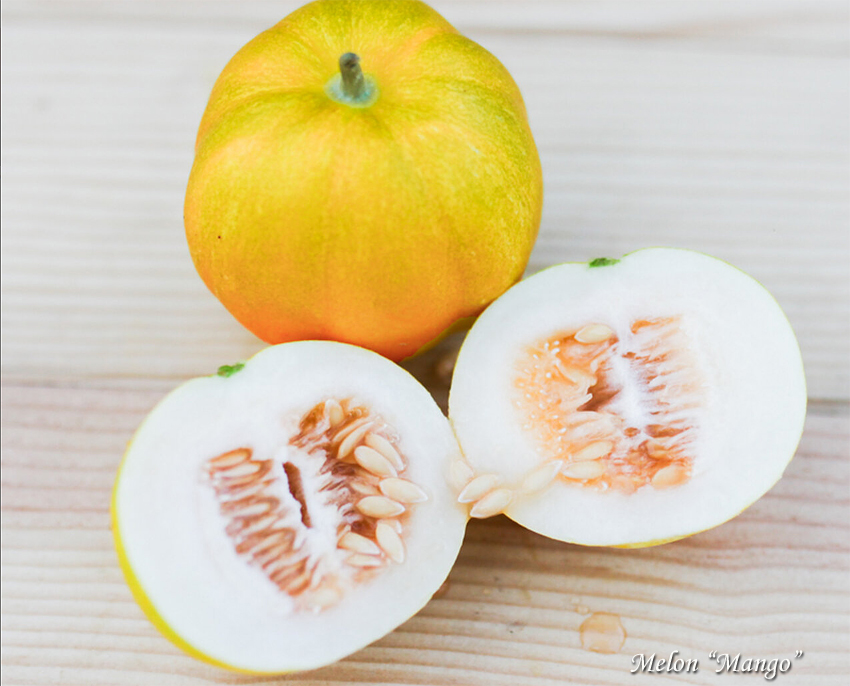
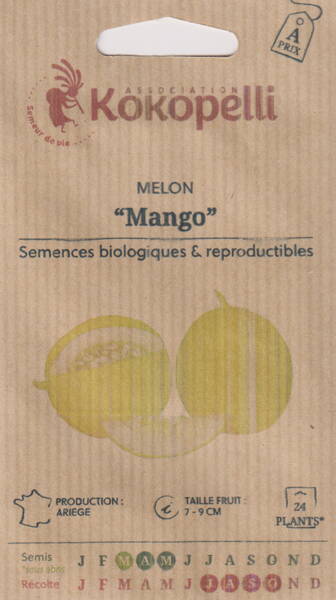
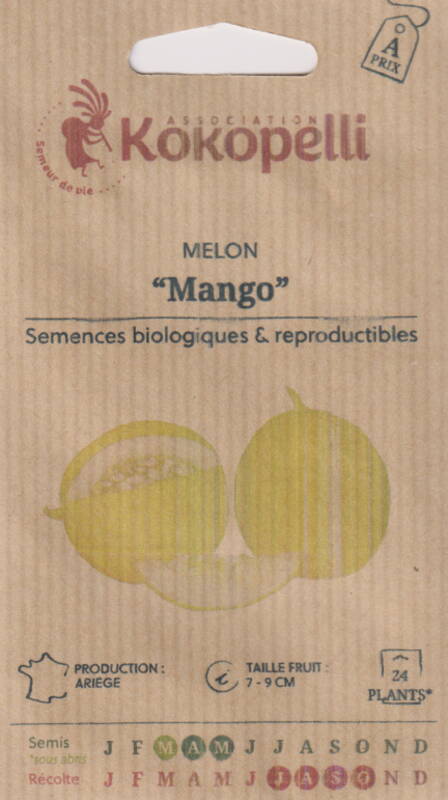
This fascinating exotic variety, also widely known as the «Vine Peach», produces charming small fruits 7 to 9 cm in diameter with a smooth yellow rind. Their white flesh, remarkably similar in texture to a mango, has a sweet, slightly tart, and highly aromatic flavor. These mini-melons are absolutely perfect for various dessert recipes, making exotic preserves, or even for savory pickling in vinegar.
Another great advantage is that the fruits store very well.
Origin: This unique heirloom variety originally comes from China and was introduced to the United States in the 1880s.
Cultivation guide.
Melons are grown both outdoors and in greenhouses, thriving in light, well-warmed, breathable, and permeable soils. Before sowing, it is advisable to treat the seeds in a weak potassium permanganate solution and then rinse them with clean water. Sow directly outdoors around May, once the soil has warmed to +15...+16°C at a depth of 8-10 cm. Planting scheme: 140x50 cm. In greenhouses, plant more densely (70x40 cm) using trellises (growing fruits can be gently supported in small nets).
The seedling method is also highly recommended. In this case, plant the sturdy seedlings outdoors after the last spring frosts when they have 3-4 true leaves. As the plant grows, it must be pruned correctly: pinch off the main stem above the 4th or 5th leaf to encourage the growth of lateral vines (this is where the female flowers actually form). Leave 2-3 of the strongest fruits per plant and remove the rest so they can ripen fully. Further care consists of moderate watering with warm water, gentle soil loosening, regular feeding, and slightly covering sections of the long vines with soil to prevent them from being flipped over by strong winds.
This fascinating exotic variety, also widely known as the «Vine Peach», produces charming small fruits 7 to 9 cm in diameter with a smooth yellow rind. Their white flesh, remarkably similar in texture to a mango, has a sweet, slightly tart, and highly aromatic flavor. These mini-melons are absolutely perfect for various dessert recipes, making exotic preserves, or even for savory pickling in vinegar.
Another great advantage is that the fruits store very well.
Origin: This unique heirloom variety originally comes from China and was introduced to the United States in the 1880s.
Cultivation guide.
Melons are grown both outdoors and in greenhouses, thriving in light, well-warmed, breathable, and permeable soils. Before sowing, it is advisable to treat the seeds in a weak potassium permanganate solution and then rinse them with clean water. Sow directly outdoors around May, once the soil has warmed to +15...+16°C at a depth of 8-10 cm. Planting scheme: 140x50 cm. In greenhouses, plant more densely (70x40 cm) using trellises (growing fruits can be gently supported in small nets).
The seedling method is also highly recommended. In this case, plant the sturdy seedlings outdoors after the last spring frosts when they have 3-4 true leaves. As the plant grows, it must be pruned correctly: pinch off the main stem above the 4th or 5th leaf to encourage the growth of lateral vines (this is where the female flowers actually form). Leave 2-3 of the strongest fruits per plant and remove the rest so they can ripen fully. Further care consists of moderate watering with warm water, gentle soil loosening, regular feeding, and slightly covering sections of the long vines with soil to prevent them from being flipped over by strong winds.